The cost of a mile
Hedging your overhead certainty according to oil price
Artificial intelligence (AI) is driving investments in infrastructure globally. The European Commission plans to invest $20 billion to build four "AI gigafactories" to enhance its AI capabilities.
The nuclear sector is charging forward, with small modular reactors (SMRs) securing major deals, fusion energy breaking records and the UK government doubling down on nuclear expansion. Here’s a look at the biggest nuclear stories shaping the future of energy this month:
The different types of data centres and how nuclear power can power them...
Power extreme
To meet demand, energy innovators need to get busy - but infrastructure owners need to get busier.
Great interview by Dan O’Shea with NetMind.Ai’s CEO, Kai Zou, on how the race to obtain compute power is forcing people to adopt decentralised compute models.
Octopus Energy Generation acquires 100% of Exagen Group from founder Jeremy Littman, driving forward UK expansion and advancing its renewable energy pipeline to support national climate goals. Highlights: * Exagen gains backing from new ownership to strengthen its position in the UK energy sector. * The company’s development pipeline includes over
The rapid expansion of artificial intelligence (AI) is revolutionizing industries, but it also brings significant energy demands, particularly in the tech sector. While AI can enhance energy efficiency in some areas, it also contributes to rising greenhouse gas (GHG) emissions due to its immense computational requirements. This has led to
Artificial intelligence (AI) is advancing rapidly, with its applications influencing industries worldwide. This surge is particularly evident in the growing adoption of generative models like ChatGPT, GPT-4, and other large language models. However, as AI becomes more entrenched in daily operations, the energy demands associated with training and running these
Hofstra University's DeMatteis School announced that it received a $1 million grant from the National Science Foundation (NSF) to enhance its high-performance computing capabilities. This funding will support the development of new computational resources and training programs aimed at fostering research and innovation in various scientific fields. The
The Rise of Modular Nuclear Reactors: Key Players and Trends In the face of climate change and the urgent need for sustainable energy solutions, modular nuclear reactors (MNRs) are gaining significant attention as a viable alternative to traditional nuclear power plants. These small modular reactors (SMRs) promise enhanced safety, reduced

The notorious Three Mile Island nuclear facility in Pennsylvania is poised to restart operations after a five-year hiatus. This move comes as part of a strategic agreement between Constellation Energy, the plant's operator, and Microsoft, which seeks to power its rapidly expanding artificial intelligence initiatives. Three Mile Island
NVIDIA has made significant strides in 2023 with its energy-efficient AI computing platforms, introducing new chips and systems designed to drastically reduce power consumption while maintaining top-tier performance. The company's Grace Hopper GH200 Superchip has been a standout in this space, leading the charge in energy-efficient AI and
The University of Alabama announced the opening of a new high-performance computing center aimed at enhancing innovation and discovery. This facility is expected to provide advanced computational resources to support research across various disciplines, enriching student experiences and fostering collaboration among faculty. The center will play a critical role in
As the demand for AI capabilities grows, so does the energy consumption associated with running complex models. Recent advancements in technology are providing data centers with innovative tools designed to significantly reduce this energy demand. These tools focus on optimizing hardware performance and enhancing the efficiency of computing systems, addressing
The rapid adoption of AI technology is creating an unprecedented demand for data centers, which are now responsible for a substantial portion of the world's energy consumption. Companies such as Google, Microsoft, and Amazon are investing billions in renewable energy to power their growing AI infrastructures. Google and
In 2023, both Google and Microsoft took significant steps to address the rising energy demands of their AI-driven data centers through major renewable energy deals. Google's Renewable Energy Push Google recently signed a deal with Energix Renewables to secure 1.5 gigawatts of solar energy, marking a significant
MIT Technology Review highlighted Form Energy's development of an innovative iron-air battery. This battery utilizes a water-based electrolyte and operates on the principle of reversible rusting to store energy. The iron-air battery aims to provide a cost-effective and sustainable solution for long-duration energy storage, addressing one of the
The University of Texas at Dallas announced that it will lead a new initiative funded by the Department of Defense (DOD), receiving $30 million over three years to develop and commercialize advanced battery technologies. This initiative aims to enhance energy storage solutions, focusing on improving the performance and longevity of
NVIDIA has recently launched the Grace Hopper Superchip, a groundbreaking CPU designed to revolutionize AI and high-performance computing (HPC) workloads. This advanced architecture is engineered to enhance processing capabilities significantly while improving energy efficiency, a critical factor for data centers grappling with rising operational costs and environmental scrutiny. The Grace
Amazon Web Services (AWS) is at the forefront of efforts to reduce the carbon footprint associated with AI workloads. As organizations increasingly rely on cloud computing for data-intensive applications, AWS is implementing innovative strategies to enhance energy efficiency and promote sustainability in its data centers. One of the key initiatives
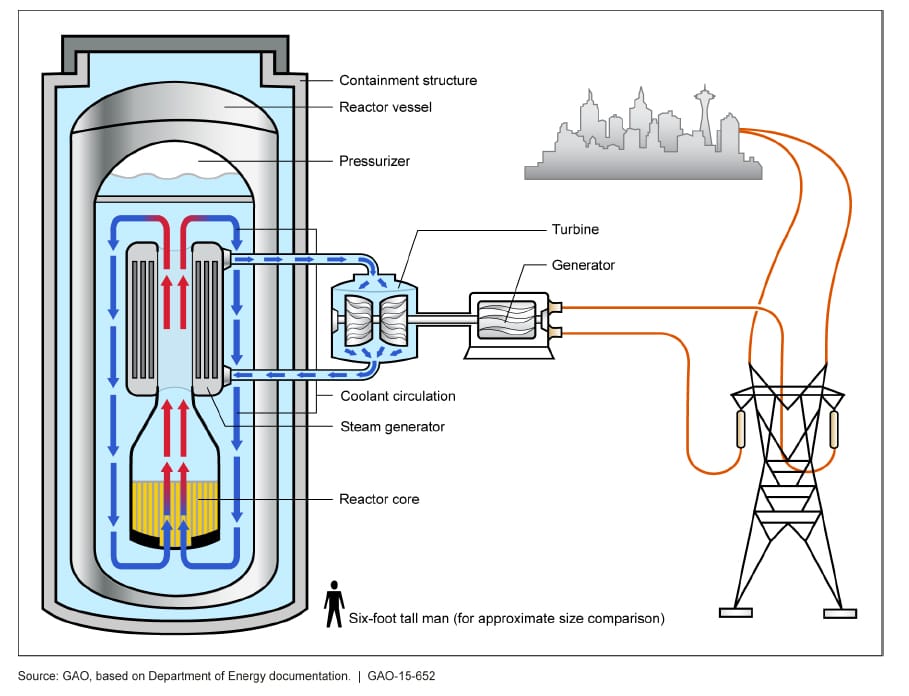
Small Modular Reactors (SMRs) are gaining traction as a transformative technology in the energy sector, particularly in the context of sustainable energy solutions. These compact nuclear reactors, such as the NuScale Power Module, offer a promising alternative to traditional power generation methods, providing reliable and efficient energy sources that can
internet of things
Australia’s National Safety Agency has developed a prototype emergency response vehicle equipped with multi-channel communications capabilities, real-time video and more than 30 screens for monitoring weather, incoming images from emergency responders and other critical data. Designed with support from Cisco, the ESIC (for “Emergency Services Integrated Communications”) vehicle serves